

BENEFITS OF GOING WITH OPTICAL DISSOLVED OXYGEN SENSORS
-
Insensitive to CO2 fouling
-
Eliminates polarization
-
Simplifies maintenance with a single replacement part
-
No electrolyte to contaminate the process
-
Quicker response time
-
Measurement is independent of flow
-
Stable against pressure spikes
-
Can be installed inverted
-
Insensitive to poisoners like H2S and Ammonia
HOW DOES OPTICAL DO SENSORS WORK?
The sensing element for an optical DO sensor is an oxygen sensitive luminophore. A blue light from the sensor excites the luminophore. When the excited molecule returns to its ground state it gives off red light. In the presence of oxygen some of the energy is transferred to the oxygen molecule. The oxygen measurement is made by comparing the excitation light (blue) to the emitted light (red).

OPTICAL SENSORS ARE INSENSITIVE TO CO2 FOULING?
Over long fermentation runs, sensors are exposed to CO2 gas used for pH control or resulting from cellular respiration. The gas travels through the membrane of a polarographic sensor and changes the pH of the electrolyte. This change results in a lower nA reading.

HAMILTON ARC TECHNOLOGY
Hamilton Arc revolutionizes the integration of sensors by rethinking communication between sensors, end users, and process control systems (PCS). The functionality of a traditional transmitter has been replaced by a microprocessor within the sensor’s head. Arc sensors communicate directly with the PCS through 4-20 mA standard and digital signals.

Dissolved Oxygen Probes
溶氧量探頭
VisiFerm ECS
VisiFerm ECS is an optical sensor for existing polarographic sensor installations. It simulates a traditional nA, electrochemical output making it easy to install with existing bio-controllers and transmitters.
Optical Dissolved Oxygen Sensors for Hygienic Applications

Upgrade from traditional polarographic sensors


OxyFerm FDA
The OxyFerm polarographic dissolved oxygen sensor is specifically suited for hygienic applications in the pharmaceutical industry. The OxFerm CIP is designed to withstand frequent CIP cleaning procedures.
Polarographic Dissolved Oxygen Sensors

Explosive Atmospheres Environment, Fermentation
VisiFerm SU
Hamilton's well known VisiFerm SU optical dissolved oxygen sensor technology has now been adopted for the special requirements of single-use bioprocessing.
Single-Use Dissolved Oxygen Sensors
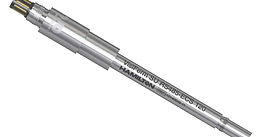
SU Bioreactors (Bag Application), SU Bioreactors (Rigid Containers), SU Mixer (Fill & Finish Application)
VisiFerm RS485
VisiFerm RS485 has the ability to communicate via Modbus, ECS and 4-20mA (via Arc Wi 2G Adapter). It has an increased robustness and requires less calibrations.
Optical Dissolved Oxygen Sensors for Hygienic Applications

Biotechnical, Ethanologenic, Fermentation, Brewery, Proactive Corrosion Control
VisiFerm mA
VisiFerm mA features a 2-wire design, HART communication, wireless communication via Bluetooth, and additional robustness for GMP production and explosive environments.
Optical Dissolved Oxygen Sensors for Hygienic Applications


